Some witnesses claimed that it was a massacre by police but was later given a communal angle.
The 1980 violence saw deaths of at least 83 people and injuries to 112 others, mostly from the minority community, believed to have been killed when police opened fire on a large gathering at a prayer ground, next to a government-inter college and a Dalit colony, in Moradabad on the day of Eid.
Report submitted to then govt in 1983
A single-member panel of Allahabad High Court, justice Mathura Prasad Saxena, was subsequently appointed to investigate the incident and the reasons behind it.
The report was submitted to the then government in November 1983, but was never made public.
Recalling the incident, Kausar Hayat Khan, 70, who had lost his friends in the violence and had raised the matter on several platforms, said, “On August 13, 1980, there was no communal incident in Moradabad. Actually, police opened fire at Muslims who had gathered at the eidgah. The next day, then Union minister Giani Zail Singh visited the city to take stock of the situation. Once he left, officials, to save themselves, gave it a communal angle. It was a massacre of Muslims and the then Congress government did an incomplete enquiry… A report was prepared, but never shared with us.”
Khan added: “I don’t know why the state wants to table this report now. Is it some kind of political message to others by reopening our wounds…?”
Another survivor, Asad Molai, now 62, said, “The incident at the eidgah was between Muslims and police. It is wrong to call it a Hindu-Muslim riot. It all started when a man found a ‘stray animal’ near our place of worship, and when he requested a sub-inspector near the venue to shoo it away, he misbehaved. Thereafter, there was a scuffle and the situation became tense. It was followed by stone pelting and the police opened fire.”
Molai added: “Both the members of majority and minority communities helped the victims that day. To our surprise, the administration later termed it a riot. We went to Delhi and appealed to most leaders, including Giani Zail Singh, to take action against the provincial armed constabulary (PAC) in Moradabad.”
Another key witness Asad Kamaal, 54, son of shahar imam Syed Kamaal Fahim, was offering prayers with his father at the eidgah. He said, “I was 11 then. It was the day of Eid. While praying with my father, we suddenly heard the sounds of gunfire. Soon, a man was brought inside the eidgah with a bullet wound and my father was told that police were firing at them. My father, being the shahar imam, immediately made an announcement on the microphone and asked the then district magistrate and superintendent of police to stop the firing. But the police continued… They only stopped when my father threatened to retaliate.”
‘Heartbreaking scenes’
“The scenes at the courtyard were heartbreaking, something I’ll never forget,” Kamaal said, adding, “My father rushed out to find people scattered all over on the ground, many crying for help. I was very young then… There were children like me in new clothes, lying unconscious, perhaps dead.”
Karamveer alias Lalla Babu, 62, leader of a Dalit social group who was also a witness to the violence, said, “There was some confrontation between the people of Dalit community and the Muslims during a marriage procession on July 24, 1980. Thereafter, a man named Javed was killed and Muslims suspected that Dalits had murdered him. When an animal strayed near the eidgah, they again suspected that we had deliberately sent it. Soon there was tension in and around the eidgah.”
Notably, members of the Indian Union Muslim League have been submitting memorandums to the government for years until 2022 requesting compensation for the kin of the victims. The last memorandum was sent to the President of India on August 13, 2022. One of their senior members said, “A list of 750 victims who had lost their lives or were missing was prepared. As the matter was closed by the government, Muslims never got justice.”
‘Table Saxena Committee report’
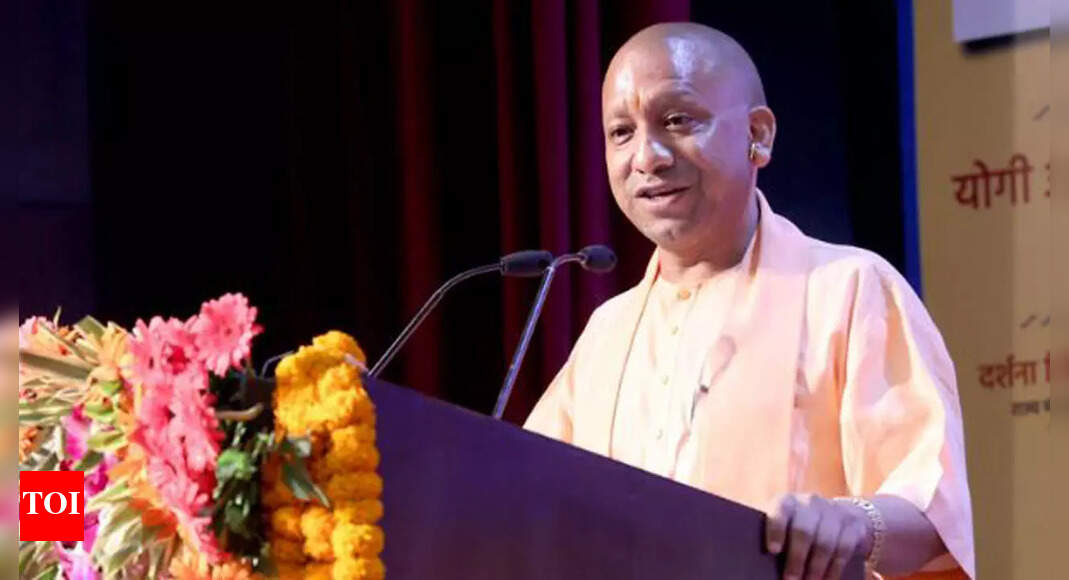
On May 12, 2023, a proposal was passed at a cabinet meeting chaired by UP CM Yogi Adityanath where it was decided to table the Saxena Committee report on the 1980 Moradabad riots before the House. State cabinet minister Suresh Khanna had said, “The report is confidential and it cannot be shared as of now. However, the government will put forward its findings in the Assembly and the truth behind the violence will come out.”
Another witness pointed out, “Several people arrested by police and charged under the National Security Act were later released from jail.” The official death count of the 1980 incident, however, is still not known, he added.